
Telling authentic and humanizing stories is a key tenet of ethical journalism. Well-researched and community-focused stories of people—across race, gender, and country of origin—are a critical part of ensuring everyone can see themselves truthfully portrayed in media. This guide focuses on how queer and trans migrants are depicted in U.S.-centric media and the impact of one-dimensional stories that fail to capture the complexity of lived experiences. Media makers have the power to flip harmful narratives by aligning journalistic integrity with thoughtful and nuanced reporting. This guide examines how the media shapes public perception, reinforces systemic inequities, and offers pathways and narrative strategies towards more just and accurate storytelling.
This guide was created in collaboration with: Familia: Trans Queer Liberation Movement (TQLM)

01Include Queer and Trans Migrants in Your Coverage
Regardless of identity, every person deserves to see their lived experiences and culture reflected in the media they consume. Focusing only on an individual’s sexual orientation and gender identity or their country of origin—but not both or other aspects of their identity—results in missed opportunities to authentically capture the experiences of those who live at the intersections of these communities.[1]
Safety Considerations
Interviewing queer and trans migrants requires particular sensitivity for their safety and well-being.[2] Many resources exist on how to approach authentic and humanizing storytelling with migrants.
Key things to consider include:
Trauma-informed reporting requires journalists to prioritize and respect the emotional safety of their sources who may experience pain when re-telling their stories.[5]
Key things to consider include:
Protecting an individual’s identity is critical to minimize harm, particularly for queer and trans migrants. Publishing full names or dead names can flag hostile actors, including governments who routinely use surveillance technology to track and target people because of their identity[6], immigration status, and advocacy work.[7] Reporters must thus consider how published information can directly put individuals, their families, and loved ones at risk for deportation, retaliation, or violence. Pseudonyms are one journalistic tool and can often be used in ways that make the methods transparent so the credibility of the article is not undermined. However, even when pseudonyms are employed, other pieces of information could be used to identify the source. Journalists might consider publishing the region from which the person is from, rather than a specific country, for example, to further protect an individual’s identity.
Reject Monolithic Stories
When reporting on queer and trans migrants, share the nuance and complexity of each individual’s migration story. The reasons queer and trans migrants leave their home countries are as numerous as there are individuals.[8] Journalists should also consider the wide array of countries from which LGBTQ+ migrants come from. Media makers can expand the public’s understanding of migration by not just reporting on people from Central and South America, but sharing the experiences of other Black,[9] Latine, and Asian migrants from other regions of the world. Also, consider the untold stories of people who identify as Indigenous in their home countries (e.g., the Mixtec communities of Oaxaca[10]).

Black migrants are missing from the conversation totally. If you tell an incomplete story, you are going to get an incomplete solution.”
– OLUCHI OMEOGA, Black LGBTQIA+ Migrant Project
In addition to rejecting monolithic stories of identity, journalists can move beyond reductive portrayals by engaging in more holistic reporting of the countries LGBTQ+ migrants call home. Too often, mainstream narratives depict entire regions, such as Latin America, as uniformly dangerous, lawless, or hostile to queer and trans people. For example, framing the entirety of South America as an unsafe region for trans people[11] overlooks the diverse political landscapes that also define these places. In fact, many LGBTQ+ migrants come from countries with rich histories of queer and trans activism[12] and democratic struggles[13]. Sharing the cultural and national complexities of queer and trans migrants creates space for a broadened public view of migration itself, while honoring the dignity and depth of their lived experiences.

Case Study
Justice for Roxsana Hernández
In 2018, reporter Adolfo Flores wrote an article highlighting the conditions that trans migrants face in detention. In his piece, “A Transgender Woman Who Was Part of The Migrant Caravan Has Died in ICE Custody,”[14] he grounds the story in the personal testimony of Roxsana, a trans woman who was seeking asylum in the United States: “I didn’t want to come to Mexico; I wanted to stay in Honduras but I couldn’t.”
As an investigative reporter, Flores combined journalistic rigor with compassionate storytelling. His tactics to uncover the realities Roxsana faced leading up to and during detention included:
Flores’ approach to Roxsana’s story both connected readers to her lived experience and transformed what could have been another tragic headline into a powerful indictment of broader injustices faced by trans migrants in detention. [15] [16]
02Consider the Impact of Harmful Reporting on Queer and Trans Migrants’ Experiences
Abandon Harmful Language and Stereotypes
Implicit biases, along with the pace and culture of newsrooms, can result in coverage that perpetuate stereotypes about queer and trans migrant communities.[17] Journalists can advocate for reporting that rejects dehumanizing language, such as references to migrants as “illegals,” “aliens,” or “felons.” Furthermore, depicting migration with metaphors such as “floods,” “surge,” “swarms,” or “invasion,” cast migrants as uncontrollable threats and evoke images of destruction.
By considering the narrative implications of language (such as framing migration as a “crisis”), journalists can prevent stories that position the government as a savior entity, which often encourages greater surveillance, detention, mass raids, and an increase in immigration and border patrol enforcement.
For guidance on how to shift the frame, refer to ASO Communications’ messaging guides on immigration and gender justice[18] and Detention Watch Network’s Toolkit to Fight Detentions and Deportations.[19]
Journalists can also challenge stereotypical narratives about what a “good” migrant looks like.[20] Stories about migrants achieving the “American dream”[21] feed harmful logics around who is deserving of care and is often used to justify incarceration. Instead, aim to capture the nuanced experiences of individuals who navigate the immigration system as queer and trans people, or who have LGBTQ+ family members.
Expand Beyond Violence
The most widely covered stories about queer and trans migrants focus on acts of violence, with many reports only occurring upon a community members’ death. Repeated exposure to media that emphasizes suffering can cause harm to communities that experience violence every day.[22] Instead consider ways to include queer and trans migrants in every day news coverage. For example, highlighting queer and trans migrant business owners, creatives, or queer and trans parents sending their kids off on the first day of school. When violence against the community does occur, it is imperative to both commemorate who the person was in life and contextualize the root causes of injustices at play. [23]
03Investigate Underlying Power Structures that Seek to Maintain Control
Thoughtful reporting on queer and trans migrant stories must co-exist with researching the larger systems at play that impact queer and trans migrant lives. Exploring the systems that undermine the rights of queer and trans people, migrants, and those at the intersections of both, provides insight on the structures and players trying to maintain wealth and power over marginalized communities. For example, in reporting on Immigration and Customs Enforcement (ICE) detention centers, journalists could consider the role of ICE within the for-profit prison industrial complex and labor exploitation practices.[24] Highlighting the motivations behind these expanding systems of harm can counter inaccurate narratives about safety and the need for ICE and law enforcement in communities.
The prison industrial complex is just one component of the United States’ ongoing legacy to assert economic, political, and social control. Journalists can analyze additional tactics of state control over queer and trans migrant bodies, such as the continued practice of eugenics.[25] Eugenics is often thought about in terms of 20th century ideology that sought to perfect society by weeding out genes deemed “undesirable,” and included practices such as the forced sterilization of Black and Latina women[26] and restrictive immigration policies.[27] However, journalists can highlight that detention is a present-day form of eugenics that political leaders and law enforcement agencies use to send a clear message of who they believe are worthy of life.[28] For example, the conditions within immigrant detention centers—including the denial of medical care, placement of trans people in facilities that expose them to assault, and misgendering individuals—all operate as mechanisms of eugenics that limit the ability of queer and trans migrants to survive.
Questions to consider to bring a eugenics lens into detention reporting:
What type of medical care are people receiving in detention?
What, if any, accommodations are there for disabled people in detention?
What does safety look like for queer and trans migrants when they are placed in detention?
Journalists may also consider the influence of Western ideology on the migration of queer and trans people. While news coverage often mentions violence as a main driver of migration, it’s often missed that many harmful views around gender and sexuality exist around the world because of colonization.[30] The imposition of Western ideas and religion cemented binary views of gender roles, expression, and relationships, many of which are still felt and practiced today around the world.
By reporting on these underlying systems of control, journalists can build narrative power that connects different social justice movements through shared solidarity.
04Highlight Solutions of Queer and Trans Migrant Communities
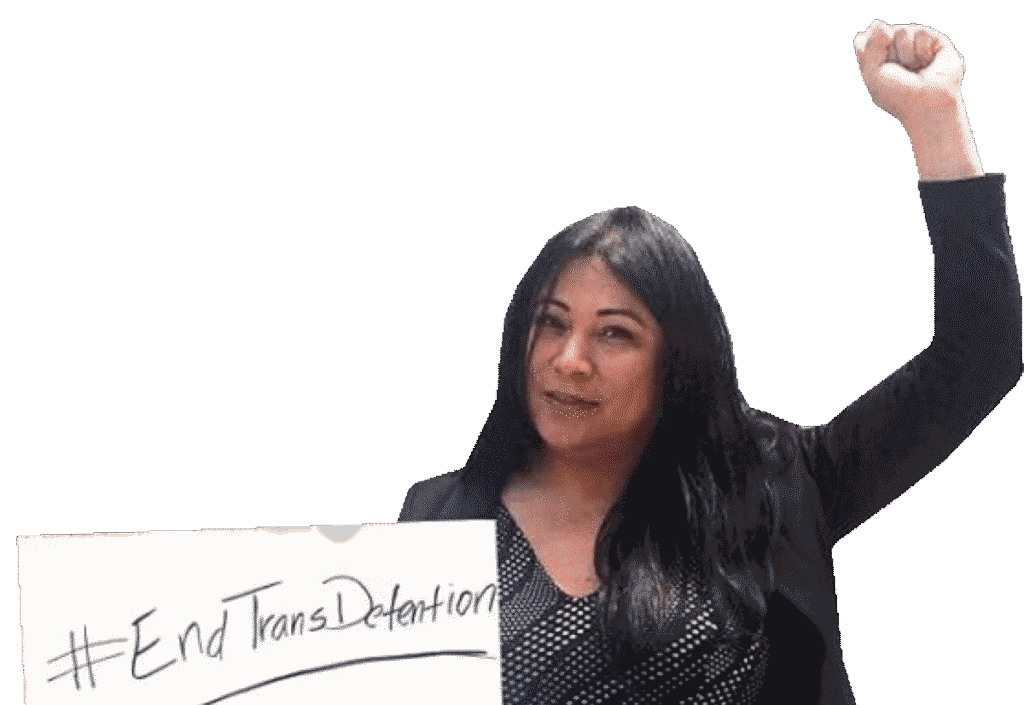
Journalists should always treat queer and trans migrants as experts in their own lives with visions and solutions for the future they desire.[31] Consider researching the long history of activism in this space, including the organizations and trans women of color who founded and led the #EndTransDetention campaign over a decade ago.[32] Additionally, uplift community-based networks and care within queer and trans migrant circles, including the ways communities disrupt restrictive ideas of what constitutes a family.[33] Trans and migrant communities have long built families rooted in solidarity and care and often create community spaces that include gathering around art, music, dance, and shared struggle.[34] Journalists should be mindful of striking a balance between emphasizing resilience and directing scrutiny toward the systems that produce the conditions communities are forced to endure. Recognizing both community strength and the need for structural change allows for more accountable storytelling.
Through deep listening and community-centered journalism,[35] reporters can bring a local lens to national moments. Engage readers to reject the human rights abuses that occur in their backyards by uplifting local activists and the ways queer and trans migrant communities are building safety for themselves.[36] The best solutions-oriented reporting acknowledges the detrimental impact of the current systems while re-imagining possibilities for the future.
The best solutions-oriented reporting acknowledges the detrimental impact of the current systems while re-imagining possibilities for the future.
How journalists can be part of the solution and inform movement organizations
There is a deep need to know where trans, queer and all LGBT people are detained. However, since February 2025 (despite a Congressional mandate), ICE has stopped reporting the number of detainees in ICE custody who are transgender, intersex, or gender nonconforming.[37] [38] This data is extremely important for monitoring the conditions of LGBTQIA+ detainees in ICE custody. Journalism is one of many strategies that can be used to find queer and trans people in detention, monitor what protections (if any) are in place, and hold ICE accountable.
05Additional Resources
This guide is a high-level overview to establish a baseline understanding of how journalists can better work with, and report on, queer and trans migrants. Given the breadth of experiences within the community, as well as rapid changes in political contexts, it is imperative to continue learning beyond this guide. Below are a few additional resources for building knowledge in this area.
References
- How ‘Undocuqueer’ Immigrants Straddle Two Marginalized Identities
- Why Should I Tell You?: A Guide to Less-Extractive Reporting
- Immigration Stories Need Immigrant Voices
- Telling Authentic Immigrant Stories
- Resources: Latinx Therapists Action Network
- Policing Gender: How Surveillance Tech Aids Enforcement of Anti-Trans Laws
- USA/Global: Tech made by Palantir and Babel Street pose surveillance threats to pro-Palestine student protestors & migrants
- Rainbow Caravan: The long journey to LGBT freedom
- Undocumented and Black: A recent college graduate shatters the perception that immigration reform is only a Latino issue.
- The Environmental Injustices of Forced Migration
- Latin America’s trans politicians gain ground in a dangerous region
- Cuerpos Furiosos: Travesti-Trans Politics for Counterrevolutionary Times
- North American Congress on Latin America
- A Transgender Woman Who Was Part Of The Migrant Caravan Has Died In ICE Custody
- ICE Deleted Surveillance Video Of A Transgender Asylum-Seeker Who Died In Its Custody
- Roxsana Hernández, a 33-Year-Old Honduran Trans Woman, Died in ICE Custody Amid Concerns She Was Abused
- How Journalists Can Avoid Exploitative ‘Caravan’ Coverage
- ASO Communications Messaging Guides
- #CommunitiesNotCages: Toolkit to Fight Detention and Deportations
- Guidelines for Reporting on Immigration Raids
- Here’s How Chef Byron Gomez Went From Burger King to Michelin-Starred Restaurants
- Negative news coverage and mental health
- When You Were Here: Imanitwitaho Zachee was a light to everyone
- An ICE contractor worth billions fights to pay detainees as little as $1 a day to work
- Journalist Resource – Reporting on Marginalized Disabled Communities
- The long history of forced sterilization of Latinas
- A Century Later, Restrictive 1924 U.S. Immigration Law Has Reverberations in Immigration Debate
- Menace to the Future: A Disability and Queer History of Carceral Eugenics
- ICE Has Stopped Paying Contractors for Detainee Medical Treatment
- Navigating the Borders of Belonging: Seeking Refuge in Queer and Trans Oases across Latin America
- Roxsana Hernandez Was Seeking A Better Life In America. She Died In ICE Custody
- Organizers say ending trans detention is a matter of life and death
- The Family that Transgender Asylum Seekers Built
- Queer Artivismo Is Community Care
- Redefining News: A Manifesto for Community-Centered Journalism
- Safety Is a Practice We Enact Together: Building Solidarity Under Trump 2.0
- ICE is Excluding Data on Transgender People in Detention
- ICE Disappears Transgender Detainee Data From Public Reports